How do you sell business data, in short?
You sell business data by licensing a copy, not by handing over your systems. Business data here means the records of how your company works: messages, email, documents, tickets, CRM records and code. We buy that copy, remove the personal details and license the result to AI labs that train and test models.
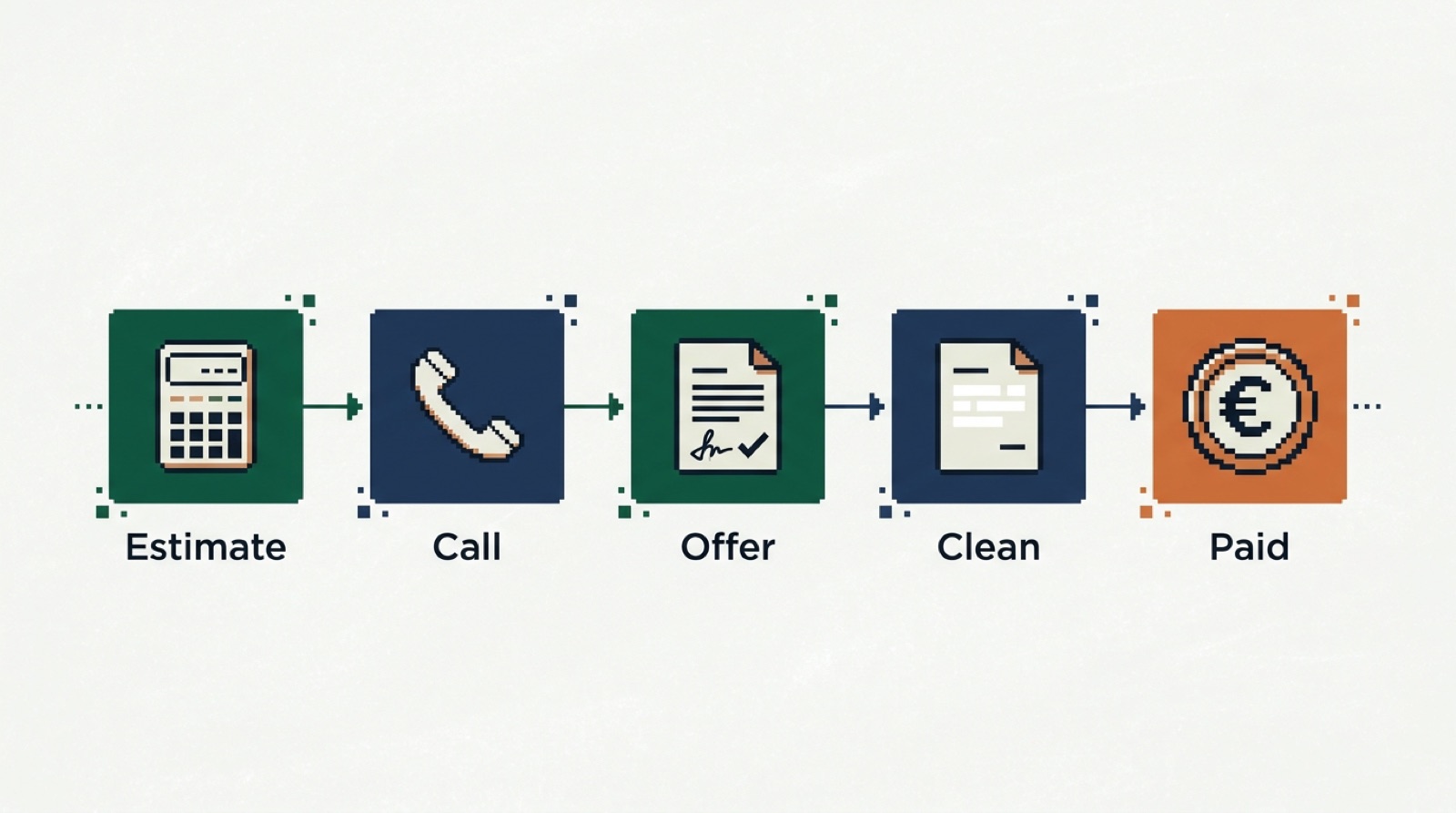
The work on your side is small but real. You decide which sources go in. You get the right people inside the company to agree. And you check a sample at the end. We do the extraction, the cleaning and the selling.
What it pays depends on size, years of history and how specialised the work is. Company data could fetch €10K–€600K. Larger or specialised datasets can earn up to hundreds of thousands of euros. That is a ceiling, not a promise. Our page on why business data is worth money explains what drives the price.
You sell a cleaned copy. Your originals stay where they are, and you keep using them.
Who buys business data, and why?
The buyers are AI labs and research teams. They train models to write, reason and do office work, and they test those models on realistic tasks. For that they need real examples of work. Think of a support ticket and how it was solved, a Jira issue and the code that closed it, or a client question and the answer an expert gave.
The public web has little of this. Most company work happens behind logins, in Slack, Teams, mailboxes and ticket systems. That is why labs now pay companies for it. Our guide on what AI labs buy goes through the record types one by one.
Why labs care where the data comes from
Labs also need clean paperwork. In July 2025 the European Commission published a template for the public summary of training content that providers of general-purpose AI models use under the EU AI Act. A dataset with a signed scope, a clear licence and a record of the cleaning is easier for them to use. That paperwork is part of what we sell.
Who does not get your data
We license only to AI labs and research teams under contract. We never sell to your competitors, and nothing is published. Data brokers, firms that trade contact lists and marketing profiles, are a different business. Personal details are exactly what we remove, so our packages hold nothing for them.
Can you sell your company's data?
Usually yes, if the data is yours and the personal details come out first. The test is control. If your company collected the data for its own work, it is usually yours to consider. If you hold it for a client, it is not.
Take an IT services firm. Its internal tickets, runbooks and Slack threads about fixing problems are its own records. The data it hosts inside a client's systems belongs to the client's purposes and stays out.
What companies usually sell:
- Chat: Slack or Teams channels about real work.
- Email threads with clients and suppliers, after cleaning.
- Documents: procedures, templates, playbooks, proposals and reports in Drive, SharePoint or Notion.
- Tickets and issues from tools like Zendesk, Freshdesk or Jira.
- CRM records that show how deals and accounts move.
- Code, with its commit history.
What always stays out:
- Data you hold for clients as a processor.
- Health data and national ID numbers.
- Third-party content you do not own, such as a supplier's manual.
- Material a client contract or NDA forbids you to reuse.
Firms with a duty of secrecy need extra care. For law firms and accounting firms, client-confidential material stays out or is fully stripped, while internal know-how is usually fine. The legal side, step by step, is in our guide to selling company data under the GDPR.
Who in the company has to approve the sale?
The person who can sign for the company decides, but rarely alone. Plan for three to five people, depending on your size and country. Most of them only need to say yes once, early on.
| Why they matter | When to involve them | |
|---|---|---|
| Owner, director or board | They sign the scope and the offer. Check your articles of association for deals that need board or shareholder approval. | Before the call |
| Data protection officer | If you have one, they review the purpose, the cleaning and records such as a DPIA. | Before the call |
| Works council | Has a say where staff messages are included, for example in the Netherlands and Germany. | Before access is granted |
| Legal or account leads | Check client contracts and NDAs for limits on reuse. | While agreeing the scope |
| IT administrator | Grants read-only access to the approved sources. | After you accept the offer |
The works council is the step people forget. In the Netherlands, the works council (ondernemingsraad) must consent to arrangements on processing staff personal data under article 27(1)(k) of the Works Councils Act. Germany's works councils have similar rights. If staff chat is in scope, talk to them early. It costs a meeting, and skipping it can stop the deal.
A data protection officer (DPO) is the person the GDPR asks some organisations to appoint to oversee personal data. Many small companies do not have one. Then the director carries the GDPR checks, with outside advice if needed.
If the company is winding down or in insolvency, the picture changes. The administrator or curator decides, often with the court's permission. Our page on selling data from bankrupt companies covers that route.
What do you need before selling data?
You need three things: a list of your sources, a clear line on what stays out, and the people from the table above on board. You do not need to export, clean or sort anything. That is our work.

Make an inventory of your sources
Write down every tool where work happens and how far back it goes. Years of history matter. A company with eight years of tickets has more to offer than one that switched systems last spring. Note old systems too: an archived mailbox or a retired wiki can hold years of records. Our page on selling Slack, Teams and Jira data goes tool by tool.
Decide what stays out
Go through your sources with the exclusions above in mind. Mark client systems, HR folders, medical files and anything under NDA. It is fine to leave whole channels or mailboxes out. A smaller, clean scope is easier to approve and easier to sell than a large, messy one.
The checklist
- A list of tools in use: chat, email, documents, tickets, CRM, code.
- For each tool: since when you have used it and roughly how many people use it.
- Archives and old systems you can still open.
- The sources that stay out, and why.
- Client contracts and NDAs that limit reuse.
- A yes from the director or board.
- Your DPO's view, if you have one.
- Works council consent, if staff messages are included.
- One IT contact who can grant read-only access.
You can start without every box ticked. The estimate takes a minute and commits you to nothing. The call is where we fill the gaps together.
How does the sale itself work?
The sale runs in seven steps. Each step has a clear owner, so you always know whose turn it is.
Get an estimate
Two questions: company size and years in business. You see a payout range in about a minute.
- You
- Answer the two questions.
- Lodex
- Show a range for a company like yours.
- Estimate. Answer two questions (company size, years in business) and see a payout range in about a minute.
- Call. In 20 minutes we go over your sources and agree in writing what is in and what is out.
- Offer. We assess what you have and make a fixed price offer in writing. You are not obliged to accept.
- Secure handover. You give encrypted, read-only access to the sources you approved. We work under NDA from day one.
- Cleaning. We remove names, customer details and other identifiers during processing.
- Your approval. You check a cleaned sample and sign off. Nothing is sold without it.
- Payment. The money is in your account within 7 days after the data passes review.
What we deliver is fully anonymised. We remove names, email addresses, phone numbers, customer names, account and IBAN numbers and addresses. Nobody keeps a key to put them back, not us and not the buyer. Health data and national ID numbers are excluded. Our page on selling anonymised company data shows what that looks like on real records.
How long does it take to sell company data?
From first call to payment usually takes two to three weeks. The estimate takes a minute and the call 20 minutes. The offer follows once we have assessed your sources.
The slow part is usually inside your own company. A board meeting, a works council consultation or a DPO review can each add weeks, depending on how often they meet. That is why we suggest starting those conversations before the call, not after the offer.
Things that speed it up: one clear decision-maker, an IT contact who can grant access the same day, and a scope with clear edges. Things that slow it down: sources spread over many old systems, or a client contract that needs checking first.
What happens after you are paid?
After payment you keep everything you had. You licensed a copy for AI training, so your originals stay in your tools and you keep using them as before. Your team notices no difference.
On our side, the originals we processed are deleted once processing is done. Only the cleaned dataset remains. Buyers first see redacted samples, and the full package is released to a lab only after it pays. It goes to AI labs and research teams under contract, never to your competitors, and nothing is published.
You also keep a paper trail: the signed scope, the offer and your sign-off on the sample. File it with your GDPR records. If a customer or employee asks what happened to their data, it answers the question.
Nothing is sold until you have checked a cleaned sample and signed off.
Lodex, a direct deal or doing nothing?
A company with years of work data has three realistic options. You can sell through us, try to sell directly to an AI lab, or keep the data where it is. Here is how they compare.
| Through Lodex | Directly to an AI lab | Doing nothing | |
|---|---|---|---|
| Who finds the buyer | We do | You do | Nobody |
| Cleaning and anonymisation | We do it, you approve a sample | You do it or pay someone | Not needed |
| Paperwork labs ask for | Signed scope, licence and cleaning record | You prepare it | None |
| Price | Fixed offer in writing before you commit | Negotiated deal by deal | €0 |
| Your originals | Kept, you license a copy | Depends on the contract | Kept |
| First call to payment | Usually two to three weeks | Depends on the lab | Not applicable |
Doing nothing is a fair choice. The data costs little to keep. But it earns nothing either, and in a closure or a system migration it may be deleted for good. If you want a number before you decide, the estimate below gives you a range in a minute, and the overview of selling company data sums up the offer.
Questions
Can I sell my company's data if it contains customer names?
Yes, as long as the data is yours and the names come out before anything is sold. We remove names, contact details, customer names and account numbers during processing. You check a cleaned sample before anything goes to a buyer.
Who buys company data from Lodex?
AI labs and research teams that train and test large models. They license the data under a written contract. We never sell to your competitors, and nothing is published.
How much work is selling business data for my team?
Mostly a 20-minute call, a few internal approvals and granting read-only access. We do the extraction, cleaning and packaging. At the end you check a cleaned sample and sign off.
Do I need my employees' permission to sell company data?
Individual consent is usually not the basis, but staff must be informed and able to object. If staff messages are included and you have a works council, it often has a say. In the Netherlands it must consent under the Works Councils Act.
Is my company too small to sell its data?
We work with companies from about 10 people. More people and more years of records usually mean a higher payout. Specialised work can matter more than size.
Do I lose ownership of my data when I sell it?
No. You license a copy for AI training and keep the originals, which you go on using as before. The agreement states what is included, who may use it and for what.
Can I say no after seeing the offer?
Yes. The offer is a fixed price in writing, and you are under no obligation to accept it. Even after you accept, nothing is sold until you have approved a cleaned sample.
What if my company is going bankrupt?
Then the administrator or curator decides what happens to the data, in the Netherlands with the supervisory judge's permission. The data usually has no book value and is lost once systems are shut down, so selling it can bring money into the estate for creditors.
This is general information, not legal advice.