What if you could get paid for the old files on your servers right now?
You can. The files you stopped opening years ago are exactly what AI labs are short of: real records of how a company does its work. Nobody has to create anything new. The value is already on your servers, in your cloud drives and in your mailboxes.
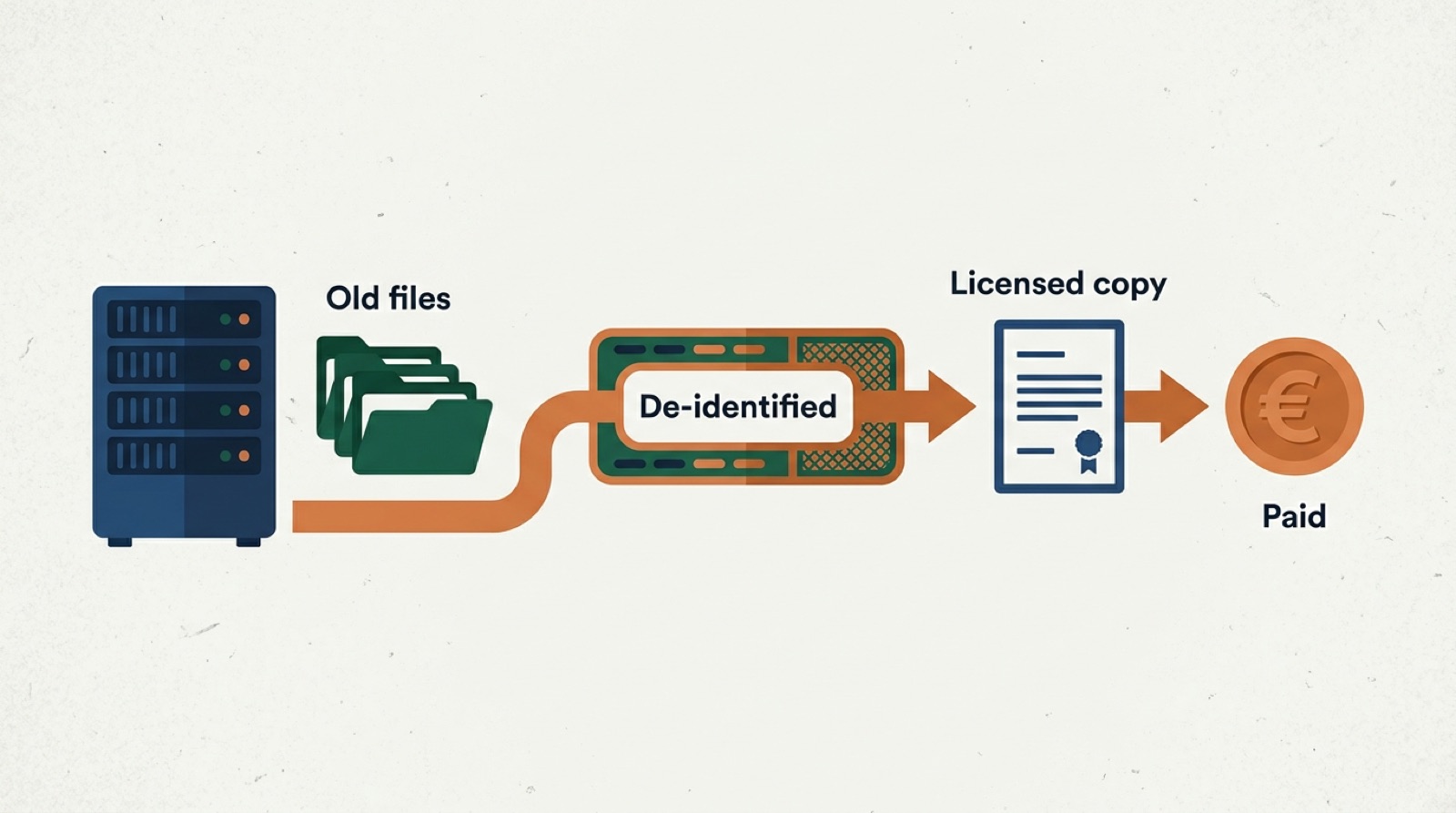
Old company data here means records you keep but no longer use day to day: closed projects, former clients, archived mailboxes, old versions of your software, the database from a system you replaced. Most companies see it as a storage bill and a security worry.
Lodex turns it into a one-off payment. We take a copy of the sources you approve, remove names and other identifiers, and license the cleaned copy to AI labs and research teams under contract. You get a fixed price in writing, paid within 7 days after the data passes review.
Which old files are worth money?
Files that show work being done, over time, by people. Files that only show a result, or only show a person, are worth much less. Try the sorter below with what you have lying around.
Pick what you have lying around.
Worth money
- Closed project foldersProposals, drafts, change requests and final versions show the whole arc of a job.
- Archived mailboxesYears of threads show how your team writes, negotiates and follows up.
- Shared driveProcedures, templates and reports, often in several versions, show how work is organised.
Worth money after an export
- Old CRM or ERPYears of deals, orders and processes. Usable once the records are exported.
A first sort. The call settles what is in and what is out.
Project folders
A project folder holds the proposal, the plan, the drafts, the change requests and the final delivery. That is the whole arc of a job. An architect's folder with six rounds of client comments teaches a model more than the finished drawing ever could.
Old databases and replaced systems
The CRM you left in 2019 or the ERP you migrated away from still holds years of deals, orders and processes. Old formats are not a problem. If the data can be exported, it can be used, and we help with the export.
File shares and email archives
Shared drives hold procedures, templates and reports, often in several versions. Archived mailboxes hold the conversations around them. Together they show how your company writes, decides and follows up.
Old code and software
Old repositories, with their commit history and review comments, show how software changed and why. Code for a product you retired counts too, as long as it is yours and not written for a client.
Paper archives
Paper counts only once it is digital. Scans you already made count like any other file. Scanning boxes just for this rarely pays off, so ask us before you start.
Are your old project files worth a €100K+ royalty check?
They can be part of a dataset worth €100K+, but it comes as a fixed fee, not a royalty. Lodex pays one agreed price per licence, in writing, within 7 days after review.
A royalty would pay you a share of what a lab later earns from a model. Nobody outside the lab can check that number, so we don't offer it. A fixed price is smaller on paper than a dream royalty and much larger than one you can't collect.
Company data can fetch €10K–€600K. Archives with many years, many people and specialised work sit at the top of that range. Our guide on what your company data is worth shows what moves the price.
Can old databases become a passive income stream?
Not in the sense of money that arrives every month without you doing anything. A licence is a one-off sale of one dataset. What is true is that the work is light, and that your company keeps producing new records you can license again later.
Compare that with what old data usually earns: nothing, at a cost. Here are the three realistic choices.
| Keep storing it | Delete it | License a cleaned copy | |
|---|---|---|---|
| Money | Costs you storage and backups | None | A fixed price, paid within 7 days after review |
| Your originals | Stay as they are | Gone for good | Stay as they are |
| Privacy risk | Stays with you | Ends | The copy holds no names or customer details |
| Effort | None | A clean-up project | A call, an export, a sample to check |
| Later | Same bill next year | Nothing left to use | Newer records can be licensed again |
Licensing doesn't stop you from deleting later. Many companies license a copy first and then clean up their archive, so the data has paid for itself before it goes.
Why is old business data worth more than you think?
Because AI labs have used up most of the easy data and need the hard kind. The public web shows finished work. Your archive shows the steps.
Labs now train models to act as agents that carry a task from start to finish: answer the client, update the record, send the invoice. To learn that, they need thousands of real examples from inside companies. In October 2026 the data company micro1 said it would spend US$1bn in a year buying and licensing operational data from companies, including internal documents, project histories and CRM data, according to The Next Web.
Old files are worth most when they show the same job done many times, by different people, over many years.
Age is an advantage here, not a flaw. Ten years of records show the same kind of task hundreds of times, which is exactly how a model learns. Our guide on what AI labs buy goes through the record types one by one.
What about the GDPR and files you were meant to delete?
Licensing does not fix data you should no longer hold, and it doesn't need to. The data we license is anonymised, so it holds no personal data at all. But the rules on keeping personal data still apply to your originals.
The GDPR's storage limitation principle says personal data may be kept in a form that identifies people for no longer than needed for its purpose. You can read it in Article 5 of the GDPR. Some records you must keep for years, for tax for example. Others you should have deleted already.
- Records you are required to keep stay with you. Licensing a cleaned copy doesn't change that.
- Records you no longer need can still be anonymised for licensing first, and the originals deleted after.
- Data you hold for clients as a processor stays out entirely.
- Health data and national ID numbers stay out entirely.
Anonymised data falls outside the GDPR because no one can trace it back to a person. Our GDPR guide to selling company data explains the legal side in full.
Can old business data safely generate pure profit?
Close to it. The data already exists, Lodex charges you nothing, and your time is limited to a call, an export and a sample check. The rest of the work is ours.
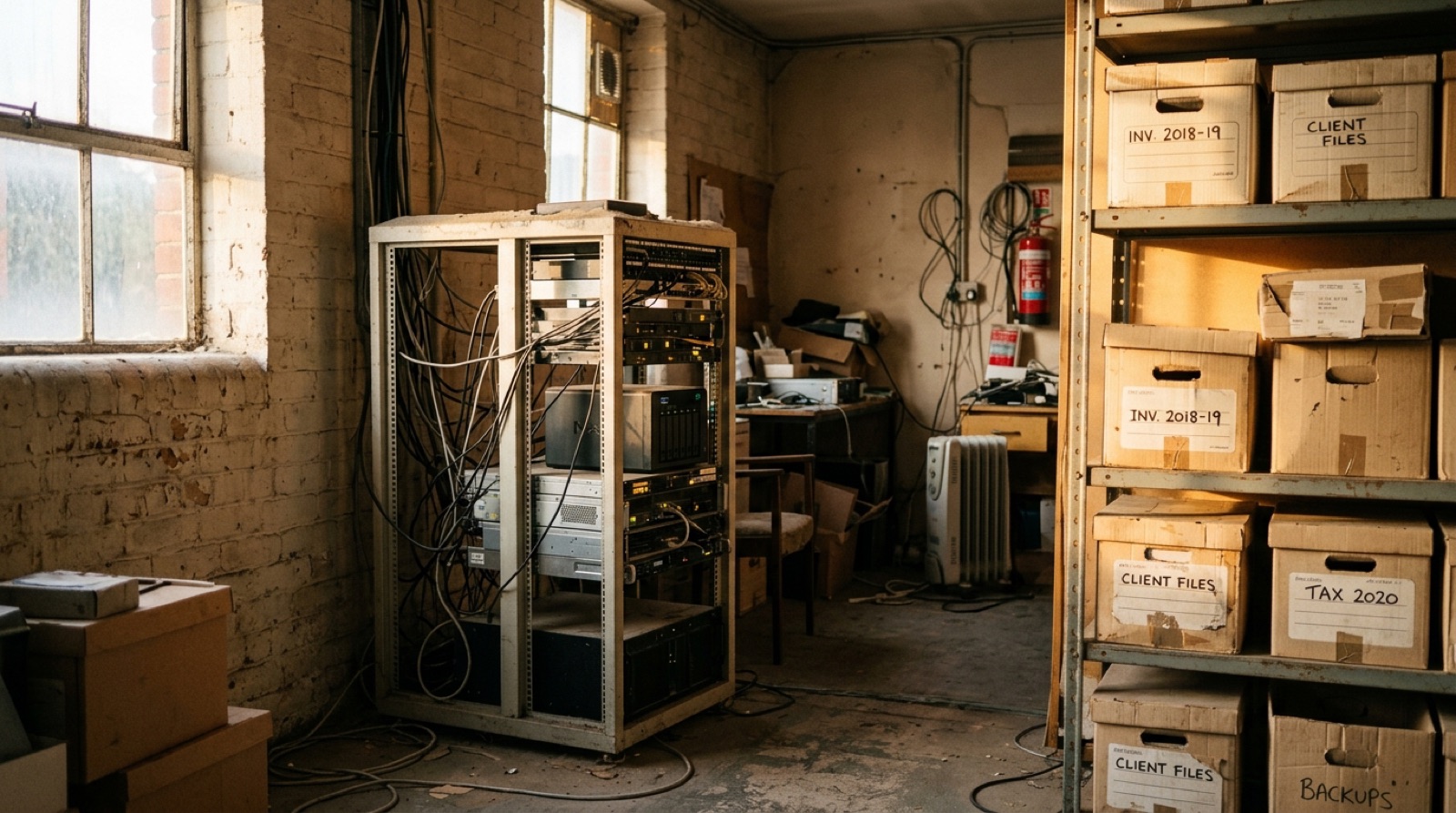
"Safely" rests on concrete steps, agreed in writing before we connect:
- Names, customer names, emails, phone numbers, addresses and account numbers are removed.
- No re-identification key is kept, by us or anyone else.
- Access is read-only and encrypted, under NDA from day one.
- You approve a cleaned sample before anything is licensed.
- Buyers see redacted samples only. The full package is released after they pay.
- We license only to AI labs and research teams, never to your competitors.
Our page on how we anonymise company data shows records before and after cleaning.
Can you turn old paperwork into revenue without risk?
Without any risk, no. Nobody can honestly promise that when real records are involved. With the risk taken out step by step and agreed in writing, yes, and that is the version we offer.
The biggest risk is usually a different one: doing nothing. An unused archive still holds every client name and every old password someone pasted into an email. Licensing a clean copy doesn't make that go away, but it turns the archive from pure cost into something that has paid for itself.
If you are winding a company down, the clock matters even more. Data from a closed company is usually wiped. Read what happens to company data in a bankruptcy.
How do you start making money from old company data?
Start with the estimate at the bottom of this page. It takes a minute and commits you to nothing.
- Estimate. Your company size, years in business and country give a first range.
- Call. We go through what you have, old and current, and agree what is in and what is out.
- Offer. A fixed price in writing. You can say no.
- Export or access. We tell you which export to run, or connect read-only.
- Cleaning and approval. We remove identifiers, you check a sample and sign off.
- Payment. Within 7 days after the data passes review.
Read licensing company data to AI to understand the contract, or what old service logs are worth if your archive is mostly tickets and work orders.
Questions
Can I make money from old company files?
Yes. AI labs license de-identified copies of old project files, databases, file shares and email archives to train and test models. Lodex pays a fixed price in writing, and you keep the originals.
Is old data worth less than recent data?
Usually not. Many years of records show the same kind of task done many times by different people, which is what a model learns from. Old data is worth less only if it is very thin or only shows final results.
Can I sell data from a system we no longer use?
Yes, if the data can still be exported or read. Old CRM, ERP and ticket systems often hold years of useful records. We help with the export.
Do paper archives count?
Only once they are digital. Scans you already have count like any other file. Ask before scanning boxes just for this, because it rarely pays off.
Is licensing old data a recurring income?
No. Each licence is a one-off fixed price, paid within 7 days after review. Your company keeps producing records, so newer data can be licensed again later.
Can I delete my archive after licensing it?
Yes. You keep full control over your originals. Many companies license a cleaned copy first and then delete what they no longer need to keep.
This page is general information, not legal advice.